· 3 min read
Experience gifts matter more than stuff—here's why and how to pick one
Most people don't remember the coffee maker their aunt gave them five years ago. They do remember the afternoon they spent learning to throw pottery with their best friend, or the concert where they heard their favorite song live for the first time.
Research backs this up. A study from San Francisco State University found that people derive more satisfaction and meaning from experiences than from material purchases—satisfaction that actually grows over time as memories improve. Experiences build connection. You're not just buying an object; you're creating a reason for someone to be fully present with people they care about, to try something new, to push themselves. That matters more than a box.
Who gets what
The work is in knowing your person well enough to guess right. It's not actually that hard.
If someone loves cooking, a cooking class teaches them something they'll use forever. A pottery workshop beats another set of decorative planters. The person who keeps saying they want to read more gets more out of a literary event or author talk than another book. For best-gifts-for-cooks, this is obvious—it's an actual investment in what they're already into.
Experience marketplaces have become dense.
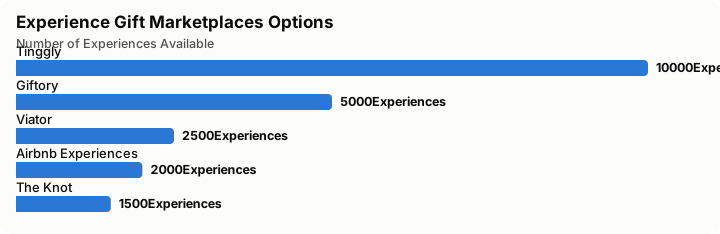 Giftory lists over 5,000 options: pottery under $75, mixology classes, couples' cooking lessons, brewery tours. Tinggly covers 10,000+ global experiences. Viator, Airbnb Experiences, The Knot—they all run the same play. A real advantage is that most vouchers don't expire. Someone gets to choose when it happens, which removes the guilt. No forced timeline.
The point is simple: you're saying "I know you, and I'm asking you to actually do this thing." That attention is what matters.
Shared or solo
For couples or close friends, the best moves are the ones that force you to show up together. A pottery class. A tasting menu at a restaurant you've both wanted to try. A couples' cooking lesson where you're laughing at your mistakes side by side. That's where memories live—in the three hours when you're both there, focused on the same thing, probably failing together in a fun way.
Solo experiences work differently. A rock climbing lesson, a solo trip, a workshop in something they've thought about but never tried—these build confidence. They're about pushing yourself, not the person giving the gift. Both are legitimate. But there's something particular about the shared ones. They make a story.
The practical question everyone asks: what if they don't use it? What if they're too busy or forget?
Reputable providers handle the uncertainty. Expiration policies are flexible. Booking is straightforward. You're not leaving someone to figure out the logistics alone. And honestly, the fact that it's not used immediately sometimes works in your favor. The person gets to decide the timing, which means they're more likely to actually go.
Why this sticks
Years later, someone remembers the meal they cooked, the view from that hike, the skill they picked up. The object sits in a closet; the experience sits in memory—and it gets better. There's research on this. A 2014 study found that while satisfaction from material goods drops over time, satisfaction from experiences increases. People retell stories. They tell them to friends. The memory becomes part of who they are.
There's also something deeper:
An experience gift says "I understand you don't need more stuff." an experience gift says "I understand you don't need more stuff." We all know it. The closets are full. Drawers are stuffed. Adding another object isn't generosity; it's just more. But time, novelty, growth, connection—that's what people actually want. Experiences are the only category of gift that delivers all four.
For best-gifts-for-people-who-have-everything, this is the only smart choice. A person who already owns what they need doesn't want a nicer version. They want to do something they haven't done.
How to pick one
Start with observation. What do they keep mentioning? "I've always wanted to try ceramics." "I keep saying I should go back to pottery." "I want to learn to make bread." Listen for the pattern. That's your lead.
Then find a platform. Giftory filters by interest. The Knot curates by relationship. Tinggly shows you global options. All of them show you pricing, user reviews, and what's actually involved—no surprises.
Don't overthink it. An experience gift is the opposite of overthinking. You're investing in something your person has already said they want to try. You're removing the excuse. That's it.