· 5 min read
How to choose an apology gift that actually works
You said something you regret. Or they misread your intentions. Maybe a mix-up spiraled into something bigger. Now there's distance, and you're wondering if a gift can help.
Short answer: it depends. A gift alone won't fix a real problem, but the right one, paired with genuine accountability, can signal you're serious about repair. The wrong one just makes it worse—turns the whole thing into a transaction, a way of buying your way out of a conversation you actually need to have.
When I think about apology gifts, what comes to mind first is how often they fail. Not because the gift itself is bad, but because someone's trying to use it as a shortcut. They show up with something expensive or trendy or "appropriate," hand it over, and hope it fixes things without ever really saying what they're sorry for. That's when it blows up.
When the size matters
Not every misunderstanding calls for the same gesture. You don't need to show up with a Harry & David gift basket if you simply forgot to text back for a day. That would feel worse—like you're either overdoing it or not taking the person seriously.
Think proportionally. A minor slip—an offhand comment that landed wrong, or you showed up late—might warrant something small and thoughtful. A $18 pair of Barefoot Dreams CozyChic socks works because it's personal without being a performance. You're saying: I know you like comfort, I thought of you, I'm sorry.
But if you said something that hurt them, broke trust, or dismissed them, proportionality shifts. The gift can't be the main event. It has to sit beside a real conversation where you acknowledge the emotional impact and commit to change. In those cases, if a gift is appropriate at all, it's something that shows you've actually listened—not a generic apology gesture.
I'm skeptical of the idea that a $50 gift can undo real damage. It can't. Not on its own. But it can matter if it's paired with genuine work.
Think about the actual person
The best move is to think about what the person actually values.
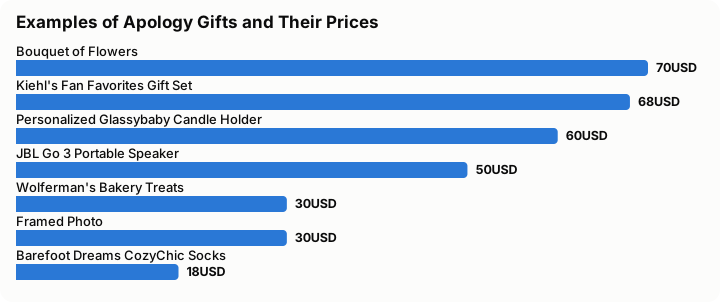 Not what fits the occasion, but what fits them. Someone who loves music might appreciate a JBL Go 3 portable speaker (around $50) because you know they're always making playlists. That's different from just picking a speaker because some article suggested it.
Your spouse is into skincare? A Kiehl's Fan Favorites Gift Set (about $68) becomes less about smoothing things over and more about giving them time to decompress—and showing that you notice what matters to them. Maybe they love a good treat. Wolferman's Bakery has options around $30. Not the fanciest, but if they mention liking shortbread or specialty baked goods, this is thoughtful because it's specific.
If you're not sure what they'd like, ask yourself this: does a conversation come before the gift? Sometimes it does. Some people need to feel heard first. They need to know you get why what happened hurt. A gift that arrives before that conversation can feel like you're trying to skip the hard part.
What actually helps
Flowers are the classic move for a reason. A bouquet typically starts around $70. Yellow roses are specifically tied to apologies—they symbolize friendship and convey genuine regret. They're not permanent, which matters. They don't sit in your home as a reminder of the awkwardness. They're beautiful for a while, then they fade, and the moment moves forward.
Flowers only work if the person actually wants flowers, though. If they're someone who forgets to water plants or finds cut flowers depressing, don't force it.
A framed photo of the two of you (starting around $30) can work differently. It's sentimental without being heavy-handed. It says: I remember what this relationship means to me. I'm not taking it for granted. This lands best when there's genuine warmth underneath—when you're reminding them of something good worth protecting, not just trying to cover up hurt.
For something personal and more lasting, a personalized Glassybaby candle holder (around $60) carries weight. It's the kind of thing someone might use and think of you without it feeling like a perpetual guilt reminder.
The execution
Most people fail here. They order something online, have it shipped directly, maybe don't even write a note. That's not a gift—that's outsourcing.
Write something. Not a long letter (unless that fits you), but something honest. "I've been thinking about what I said, and I regret it. You didn't deserve that. I'm working on being better about this. I got you this because I know you love coffee or hiking or quiet time, and I wanted to remind you that I do think about who you are, even when I mess up." Something real, not a template.
If you're including a gift receipt—and you should, because it gives them an out—mention that too. "I included a receipt in case you want to exchange this for something different." That's not undermining the gift. That's showing trust.
Deliver it in person if you can. Hand it to them, acknowledge what you're sorry for in a sentence or two, and then stop talking. Sit with the awkwardness for a minute. You don't get to move on just because you brought something. That discomfort is part of the repair.
What definitely backfires
Don't buy something expensive thinking the price tag will make up for harm. A $200 gift after you dismissed their feelings is insulting. It says you think money is easier than accountability.
Don't pick something practical as an excuse to give an apology gift. A new blender isn't an apology. It's just a blender with bad timing.
Don't regift something. If you do, it needs to be new, unused, and rewrapped with actual care. The effort has to be visible.
And don't use the gift to avoid the conversation. The apology is the thing. The gift is supplementary. If you show up with a present and no real acknowledgment of what you did, they'll feel patronized.
Where to start
If you're looking for something modest, gifts under $50 can anchor your thinking. Not because cheap gifts are always appropriate, but because the price point forces you to be thoughtful instead of reaching for something big. A good coffee mug, a book they mentioned, a quality candle, a nice pen—these work because you had to think about what the person actually likes.
For those wanting to go higher, gifts under $100 opens up options like skincare sets, flowers, or personalized items that feel more intentional.
The real work happens after.
A gift can open the door. But you have to be the one who walks through it. Whether you follow through on what you're sorry for. Whether you listen better. Whether you earn back what you lost. A gift can open the door. But you have to be the one who walks through it.