· 4 min read
Milestone gifts versus everyday gratitude: how to balance both
There's a difference between the gift you bring to a wedding and the thank-you gift you send after someone covers your dinner. One marks a major life event; the other says "I noticed what you did for me." Most people aren't sure where to draw the line, or whether spending more on a milestone means spending less on gratitude the rest of the year.
They do different work. A congratulations gift recognizes someone crossing into a new chapter—graduation, marriage, a promotion. A thank-you gift responds to a specific kindness. Each one has its own logic. Understanding that logic means you stop second-guessing yourself every time you reach for your wallet.
What makes a milestone gift different
Milestone gifts matter because the moment itself matters. A wedding, a graduation, a housewarming. Friends and family show up. They give something. It's expected, yes, but it's also real.
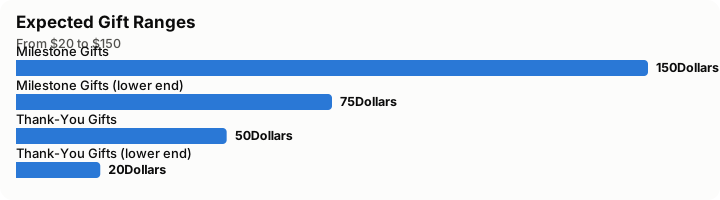
Most guidelines land between $75 and $150, depending on your closeness to the person and how significant the event is.
 A best friend's wedding is probably at the higher end. A colleague's graduation might be at the lower end.
Milestone gifting comes with registries, which can feel constraining but exist for a reason. Registries aren't greedy—they're practical. They tell you exactly what the couple needs. Graduations leave more room for judgment depending on the relationship.
The everyday gratitude gift
Thank-you gifts don't need to be expensive. They need to be thoughtful. A thank-you gift runs $20 to $50—chocolates, a scented candle, something small the person wouldn't buy themselves. The object isn't really the point. It's saying: "What you did mattered, and I noticed."
You have freedom here that milestones don't allow. No registry. No social expectation of a certain price. But that freedom demands you think about the person. You need to know something about them.
Unlike milestone gifts, thank-you gifts don't trigger the same anxiety. You're less likely to overthink them. You're more likely to send them at all.
The details that actually matter
Two things shift a gift from adequate to meaningful: personalization and presentation.
A handwritten note attached to a milestone gift costs nothing and changes everything. It says you took time. The way something is given—with care, with attention—matters as much as the thing itself.
For milestone gifts, choose something from a registry but add a personal element. For everyday gratitude, pick a gift under $50 that's tied to something you actually know about the person. Someone who loves to read probably doesn't want a candle, no matter how nice it smells.
People often hesitate because they fear getting the proportion wrong. Spend too much and the recipient feels uncomfortable, like they owe you something. Spend too little and the gesture feels hollow. But research on gift-giving psychology suggests this anxiety is mostly self-created. Recipients care about thought and fit, not whether you hit exactly $120 versus $110. They care that you showed up and the gift fits.
The cultural piece
Milestone gifting expectations vary wildly across cultures. In some contexts, cash for weddings is standard. In others, handmade items carry more weight. Before you default to whatever your family does, think about what the recipient's family expects. This isn't about being rigid. It's about respect.
Everyday gratitude gifts are more personal by definition, so cultural expectations matter less. You're responding to a specific person and a specific act of kindness, not to a standardized event.
Experiences and flexibility
Both types of gifting have shifted toward experiences or money in recent years, especially for people who already own what they need. If your friend's new apartment is well-stocked, a housewarming gift that's cash or a dinner reservation might land better than another kitchen tool. If someone just got a promotion, tickets to something they want to do beats another generic gift.
Giving people a choice increases how much they value a gift. It respects their agency and their actual needs.
Balancing both in practice
You can spend generously on milestones and moderately on everyday gratitude without it feeling imbalanced.
The mistake is treating them the same way. A $100 graduation gift is proportional to the event. A $25 thank-you for a friend who helped you move is proportional to the gesture. They're not competing for the same budget. They're serving different purposes.
The mistake is treating them the same way. If you approach a thank-you gift with the same worry you'd apply to a wedding gift, you'll either spend too much or overthink it into nothing. If you treat a milestone as casually as everyday gratitude, you risk undershooting an important moment.
The real work is matching the gift to the occasion. Some years you'll have more milestones than others. Some people in your life will get more gifts from you because there are more reasons to give them. That's not a failure of balance. It's how life actually works.
When you're unsure: $75 to $150 for milestones. Thought and fit for everyday gratitude. Let the relationship tell you which end of the range to aim for. Pay attention to registries or stated preferences. Write a note.