· 4 min read
The wedding gift spreadsheet nobody admits to keeping
You've done it. Maybe you haven't told anyone, but you've created a spreadsheet to track wedding gifts. Columns for couple names. Dates. What you spent. Whether you mailed the thank-you note yet. Some people color-code it. Some add a registry column. You're not alone. More importantly, you're not ridiculous—it's actually smarter than pretending you'll remember this stuff by the time the fourth wedding invitation lands in your inbox.
Here's the problem: you attended three weddings in six months. You spent roughly $450 on gifts. You gave a cutting board to someone. Then, three months later, another couple asked you to pick from their registry, and you panicked because you couldn't remember if you'd already given them a cutting board. You hadn't—different couple—but you spent ten minutes at the store second-guessing yourself anyway. A spreadsheet would've solved that in ten seconds.
Why you actually need to track this
The numbers are real.
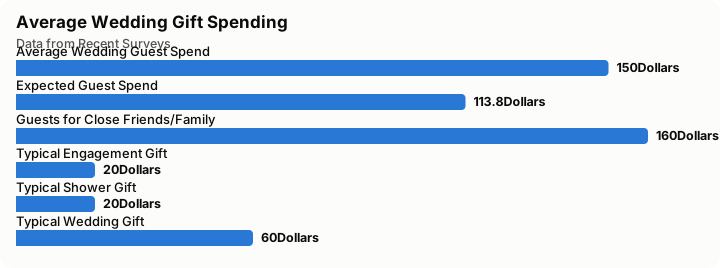 The Knot's 2024 Guest Study found wedding guests spent an average of $150 on gifts that year. A Shane Co. survey of over 3,000 Americans put guest expectations at around $113.80. That's not huge per wedding. But if you're attending three, four, five weddings in a season—plus the travel, attire, and bachelor party money—you're looking at $610 on average to attend a single wedding.
When you're deciding whether to spend $75 or $125 on a gift, it helps to glance at what you've already committed to for the year. When a couple asks you to cover part of a group gift, you need to know if you have the headroom.
Then there's the registry itself. About 3 in every 10 wedding gifts come from outside the registry. That means couples get duplicates, things they didn't want, things that don't fit their apartment. A spreadsheet column for "checked registry before purchasing" prevents you from being the person who gave them the same kitchen gadget they already own. It's not about being perfect. It's about not throwing money away on something they'll regret.
The actual math
Most people don't talk about it, but there's a framework. Etiquette suggests a 20/20/60 split if you're attending multiple events for the same couple: $20 on an engagement gift, $20 on a shower gift, $60 on the wedding gift itself (on a $100 budget). Close friends and family usually give $75 to $100 or more. Coworkers or distant relatives: $25 to $50. The Knot's data showed guests spent an average of $160 on gifts for close friends and family.
What matters is honesty about what you can afford. Couples know you're on a budget. Crate & Barrel's 2025 data shows 49% of couples are now adding lower-priced options to their registry specifically because they recognize guests are managing real costs just to attend.
A spreadsheet makes this transparent to yourself. You see the pattern. You know if you're spending more on distant relatives than close friends, or if you're overspending on the engagement shower when you should save money for the actual wedding. It's the kind of clarity that prevents guilt.
What people actually track
You're probably tracking more than just the gift. There's the timing: did you send it before the wedding or after? Crate & Barrel's research suggests the ideal window is two weeks before. Three months after is acceptable. Up to a year is fine by most etiquette experts, though not ideal. A "sent date" column means you're not scrambling to remember if you already mailed it.
Then there's the thank-you note tracking. After the tenth wedding, you won't remember who sent what. A "thank you sent?" column with a date is the difference between "I'm so grateful" and "wait, did I already thank them?" It takes thirty seconds to add when you actually send the note.
Some people track gifts received so they know what to expect when the thank-you card arrives. Some note whether they went off-registry. Some include a "notes" column: "They said they'd prefer an experience gift" or "They already have a stand mixer." These details matter when you're actually at the register.
The one practical thing people don't mention
Spreadsheets are traceable. If you give cash or a check, a spreadsheet is your record. If an envelope goes missing—and they do—you can prove you sent it. The Knot's 2024 data shows 40% of US guests gave cash or gift cards that year. Cash is fast and flexible, but it's untraceable. A spreadsheet entry with "$150 cash given at reception on June 15" is proof if there's ever a question.
For checks, your banking record is the receipt. But the spreadsheet still matters: it's your running list of who got what, when, and in what form. If you're coordinating group gifts, the spreadsheet is essential. You need to know who's chipped in, who owes money, and what the final amount is before you buy.
Just do it
You don't need to overcomplicate this. Couples download free wedding planning Excel suites with budget sections and guest lists already built in. Etsy sells physical trackers if you prefer pen and paper. The point isn't perfect record-keeping. It's having a system that stops you from overthinking.
The spreadsheet is permission to care about the logistics without feeling neurotic about it. You're managing money responsibly. You're being organized. You're avoiding duplicate gifts. That's not excessive. That's thoughtful.
If you're attending a lot of weddings, a spreadsheet pays for itself in peace of mind alone. And if someone asks you to contribute to a group gift, you'll have your budget right there, clear and unambiguous.
Keep the spreadsheet. Don't feel weird about it.