· 4 min read
Timing gifts right: why missing a milestone matters less than you think
Seventy percent of adults keep gifts they received after the deadline. They don't hide them, don't resent the giver, don't assume lateness means neglect. They just... use them. A 2024 study found that givers spend enormous mental energy on this fear—worrying the tardiness signals something—while recipients mostly care that the gift showed up at all.
The panic makes sense. We're trained to believe timing equals caring. But the real story is messier: what matters shifts depending on the occasion, and the gap between how bad we think we look and how bad we actually look is enormous.
Birthdays: the "thinking of you" window
You've got roughly a month.
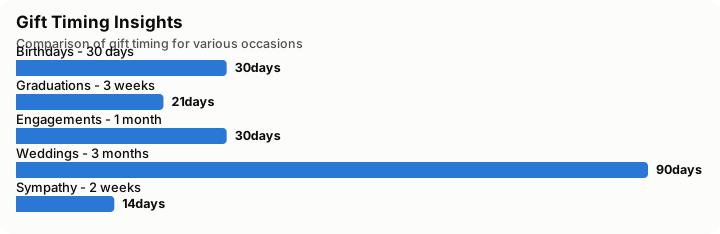 Send it within 30 days and nobody marks you late. Send it at day 45 and most people shrug; send it at day 90 and it starts to feel forgotten.
What kills you here isn't the lateness—it's the panic response. Givers who know they're running behind often downgrade the gift itself, grabbing something cheaper and faster just to make the calendar look better. A 2024 study showed this directly: anxiety about missing the date correlates with picking lower-price gifts. The recipient doesn't benefit from your rushed timeline. You've just given them both a late gift and a worse one.
Instead: if you're going to be late, be thoughtfully late. A $60 cookbook from a used bookstore that matches someone's actual interests arrives in month two and lands entirely differently than a $20 candle on day one. The care reads louder than the calendar.
Graduations: the accomplishment window
Graduation is an event tied to a specific moment—the ceremony, or the week after. If you're there or close, give it then. Miss that window by a few weeks? Still fine. The achievement doesn't expire.
Your brother finishing his master's. Your best friend's kid graduating high school. That milestone is still recent enough at week three that a gift feels like you were marking their accomplishment, not checking a box.
Concrete option: graduation gifts under $75 tend to work—a nice pen, a plant for their apartment, a book relevant to their field or interests. The specificity matters more than the dollar amount.
Engagements: the announcement window
Engagement gifts exist in their own lane, separate from the wedding gift. Most people miss this category entirely, which is odd because it's easier.
Give an engagement gift within a month of the announcement, or bring one to the engagement party. That's it. The window is tighter than for other milestones because the announcement itself is temporary—that first wave of excitement and newness. You're acknowledging the news, not the event months away.
If you send something at week six, it still reads as thoughtful. If you send it at month six, it starts to read like you confused it with a wedding gift.
Weddings: the three-month rule (with grace)
The Emily Post Institute says three months. Three months from the wedding date for a gift to arrive. Not a year. Not "whenever." Three months.
The reason is practical: the couple is already managing thank-you notes, adjusting to being married, possibly returning duplicate gifts, catching their breath. Three months is long enough to not feel rushed but close enough that the event is still legible in their calendar.
But here's what nobody talks about: sending something at month four or month five is still exponentially better than sending nothing. A 2024 study compared recipients who received late gifts against recipients who received no gift at all. Late gifts won. Absence was the real failure. If you're staring at day 100 feeling guilty, send the gift. The guilt is the problem, not the timeline.
Wedding gifts under $100 let you pick something real—matching wine glasses, a quality serving bowl, nice bedding—without overstretching.
Sympathy: the exception
This is where timing actually carries weight. Send sympathy gifts or flowers within two weeks of a loss. Not as a rigid rule but because the first two weeks are logistics and shock—funerals, paperwork, initial grief. Someone's drowning. Two weeks is when they need meals, flowers, presence most.
After two weeks, a sympathy gift shifts meaning. It's less "I'm helping you through the initial crisis" and more "I'm still thinking of you during the longer grief." Both are good. They're just different.
The real issue
Givers catastrophize about lateness. Recipients don't. We're spinning worst-case scenarios about what lateness says about us—that we don't care, that we're flaky, that we damaged the relationship. Recipients are just relieved someone remembered them at all.
That doesn't mean ignore etiquette. There are real windows. Engagement gifts within a month do feel different than ones at month six. Sympathy flowers day three feel different than day thirty.
But the punishment you imagine? It mostly doesn't exist.
What actually damages relationships is silence.
The punishment you imagine? It mostly doesn't exist. Not sending anything. Or sending something so generic and rushed that it reads like an obligation you resented.
So: mark milestones on your calendar when you can. Send gifts within the windows that make sense for the occasion. But if you're three weeks late on a birthday? Gifts under $50 can be genuinely thoughtful. Send it. Write a note. Stop spinning.