· 3 min read
Why group gifts need a theme (and how to actually pick one)
When group gifting actually works
Group gifts are awkward. Five people, five opinions, everyone hedging. You end up with something beige that the recipient forgets about by next week. But here's what I've noticed: the ones that land—the ones people actually use or remember—have one thing in common. They started with a decision. Not a compromise, a decision. A theme.
Instead of "What does everyone think?" it becomes "We're doing an experience gift" or "Everything's local" or "Only homemade stuff." Constraints paradoxically make choosing easier. And the recipient can actually see the thought behind it.
How a theme makes coordination less painful
First: one person organizes. Not a committee, not rotating responsibility. One person collects money, sends updates, herds everyone toward a deadline. Themes make this person's life better because they're not fielding random suggestions anymore. Everyone knows the lane they're supposed to stay in.
For amounts, suggest a range.
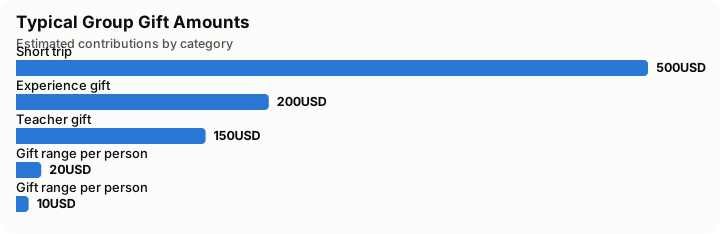 "$10 to $20 per person" beats "$15 exactly" because not everyone has the same budget and people are more likely to participate if they can adjust. A teacher gift usually lands between $50 to $150 total depending on group size. Something bigger—cooking classes, a short trip—might be $200 to $500, and you'd ask for more. Ranges just work better.
Use Venmo or a payment app. Cash is chaos—someone always loses track of who paid, someone else covers a gap out of guilt, and it becomes this weird social tax on the organizer. A digital record keeps things clear and makes people more comfortable asking exactly how much is needed.
Themes that don't feel like you phoned it in
The strongest themes connect to who the person actually is. If they cook, an experience-based gift makes sense—a class, specialty tools, a dinner somewhere good. If they're outdoorsy, gifts for outdoor enthusiasts usually work well because a small pool of money can fund something real instead of a mass-produced nothing.
A "local only" theme is quietly effective. Everyone sources something from an actual maker or business in your area instead of buying generic stuff from a big retailer. It feels distinct, it helps actual people, and the recipient learns something about where you are. That's harder to replicate than a Amazon gift card.
If money's tight, go homemade. Lower cost, more creativity, and people remember it. This works best when everyone knows each other well—coworkers who've been together for years, close friend groups, family. The handmade part signals that people spent time, not just money.
A "five senses" theme is structured without being pretentious: one person contributes something to taste (good chocolate, wine), another something to hear (a nice speaker, audiobook subscription), then see, touch, smell. It forces variety while keeping coherence.
Charities also work if your group aligns on causes. Let people vote on where the money goes, then pool it there. Everyone feels like the gift actually meant something.
Keep communication in one place
One channel. Not a group text and an email and a Slack thread. Pick one thing with a history—ideally something searchable so people can look back. Send updates: who's paid, how much more you need, when you're buying it. It prevents the organizer from repeating themselves ten times.
When you present it, include a group card. Real messages from each person, not a generic "Congratulations." It takes twenty minutes and it reminds the recipient that multiple people actually thought about them. The object alone can't do that.
Why this matters
A group gift without a theme often feels like nobody in particular thought about it—it's what five people could agree on, which usually means it's safe and forgettable. A theme changes that.
A group gift without a theme often feels like nobody in particular thought about it—it's what five people could agree on, which usually means it's safe and forgettable. It says: the group made a deliberate call to do something within a specific frame.
The recipient notices. They see the decision-making in the gift. "Everyone decided to do experience-based stuff because they know I'd rather make memories than own more things." That's different from "We pooled cash and grabbed whatever."
If you're organizing a group gift for teachers, a retirement, a colleague, or anyone else where pooling makes sense, the theme is what separates an actual choice from going along with whatever. It's the difference between a gift and a transaction.