· 4 min read
When regifting actually makes sense and when it doesn't
You open a gift and feel that familiar flutter of dread. It's nice enough, but it's not for you. It's too large for your apartment, or you already own one, or it's just wrong. Your first instinct isn't gratitude. It's "who could I give this to?"
You're not alone. A 2022 Pack & Send survey found that 89% of respondents had regifted before. More recent data: 42% of Americans planned to regift during the holidays specifically to save money. The practice is so common it barely registers as controversial anymore — yet most people still feel guilty about it.
That gap between what we do and how we feel about it matters because guilt is expensive. It costs energy. And according to research, it's mostly wasted.
Stop feeling guilty about the research
Here's what researchers found: receivers think regifting is worse than givers actually do. In a 2012 Psychological Science study called "The Gifts We Keep on Giving," Gabrielle Adams, Alison Wood Brooks, and Michael Norton showed that people on the receiving end believed passing a gift on would offend the original giver far more than givers reported feeling offended. Receivers thought regifting was almost as insulting as throwing a gift in the garbage. Givers saw throwing gifts away as significantly worse.
You're probably worrying about nothing.
But the guilt is real. It surfaces when people talk about regifting: guilty, lazy, thoughtless, disrespectful. The act touches something about whether someone will feel their relationship with you has been taken seriously.
Money changes everything.
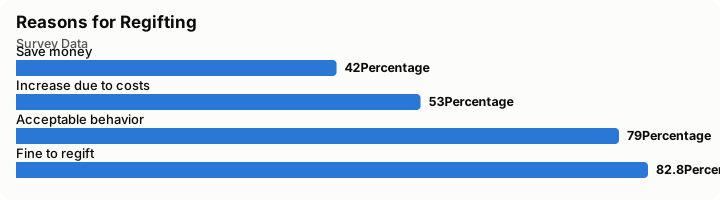 A 2024 Empower survey found that 53% of Americans were more likely to regift that year due to the cost-of-living crisis. When the average person spends around $150 per person on holiday gifts (2024 Bankrate), regifting stops being thoughtlessness. It becomes survival.
When it works
The Emily Post Institute's rules are strict but clear: the gift must be brand new — still in original packaging, all parts and manuals intact. The original giver and the new recipient should have no way to compare notes. A gift from a coworker goes to a college friend or a neighbor, never another coworker. You rewrap it with a fresh card.
Better: tell them it's regifted. Not as an apology. "I got this last year and haven't used it, but I think it's perfect for you." That honesty works because the real problem isn't regifting itself. It's the impression that you didn't think hard about what someone needed. If you say "I thought of you when I saw this," they'll believe it. If they find out later you lied, they feel foolish and betrayed — not because you regifted, but because you didn't trust them with the truth.
Numbers back this up. An American Express nationwide consumer spending survey found that 79% of respondents believed regifting is acceptable. A CreditDonkey survey showed 82.8% saw it as fine. Those aren't grudging majorities.
Never
Don't regift anything handmade, personalized, monogrammed, or engraved. That tells someone you're disposing of what they made or meant specifically for you. Don't give something used, opened, or expired.
Sentimental gifts are dangerous too. If someone gave you a hand-sewn scarf, that gift carries information about your relationship. Passing it on says you don't value what they made. Research shows regifting symbolic gifts makes people significantly more likely to feel offended.
Worst actual regifting disasters: old fruit cake, fingernail clippers, toys with broken pieces. These aren't thoughtful regifts. They're items someone used as a trash can.
What actually gets regifted
Wine and candles top the list. A Pack & Send survey found that 39% of respondents had regifted drink products like alcohol or tea and coffee sets. These work because they're consumable, arrive in professional packaging, appeal broadly, and rarely feel personal. A bottle of wine isn't a statement. It's a bottle.
Women regift more often than men do. CreditDonkey data showed 41.3% of women had regifted compared to 28.1% of men. Either men are more hesitant, or they're less willing to admit it.
What matters
Gabrielle Adams at the London Business School, who's done the main research on this, makes a simple point: don't hide that you're regifting. Instead emphasize that the gift suits the recipient better than it suited you. That's the difference between "I didn't care enough to buy something new" and "I thought of you when I realized you needed this."
With gifts, thought matters more than the object. If you treat regifting as an admission of failure, they'll feel that. If you treat it as "I found something perfect for you," they'll feel that instead.
Most of us will regift at some point. That's not lazy or disrespectful. It's practical. The respect is in choosing who gets it and the honesty you bring to the moment.